About this guide
You've just watched our animated retelling of Stevenson's Strange Case of Dr Jekyll and Mr Hyde — or you're using it with a class or a book club. This guide helps you take the story further: a little context, the big ideas worth talking about, and a few questions good enough for a classroom, a book club, or a long walk home with your own thoughts.
There's nothing to buy and nothing to sign here. The original novel is short — you could read it in an evening — and because it belongs to everyone now, it's free. Links are at the end.
A note on who this is for. These are classics, not "kids' stories." The retelling is made to pull younger readers in, but the book rewards a reader of any age. Use this guide with a teenager, a class, a book club, or just yourself.
About the story
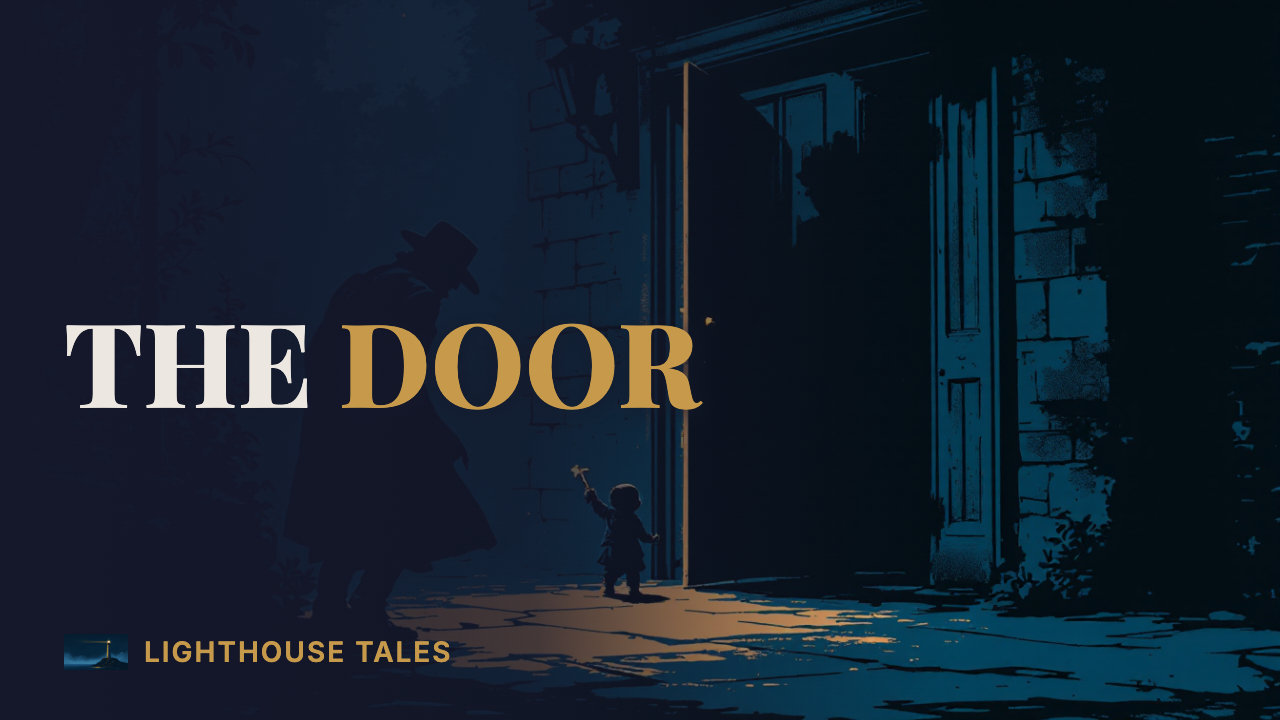
A respectable London doctor. A blistered door on a busy street that no one else seems to notice. And the small, wrong-looking man who holds its key. That's where Stevenson starts — and he tells almost the whole thing not through the doctor, but through his old friend Mr Utterson, a dry, decent lawyer who watches the people he loves come apart and cannot work out why.
Stevenson built the story around a secret so famous it has entered our language — "a Jekyll and Hyde personality" — though his first readers in 1886 met it with no warning at all. That's worth holding onto if you're coming to it fresh: the real power of the book isn't the twist everyone now half-remembers. It's the human question underneath it — why a respectable man would court his own ruin, and what it costs him.
Before you watch or read
A few things that make the story land harder:
- Robert Louis Stevenson (1850–1894) was a Scottish writer, often sick, often travelling, who also gave us Treasure Island and Kidnapped. He wrote Jekyll and Hyde fast, reportedly in a feverish burst, after a nightmare.
- It's a Gothic novella. "Gothic" means a story that finds its horror in atmosphere and dread rather than gore — fog, locked doors, respectable houses with something wrong inside them. The fear is psychological. It creeps.
- It's set in Victorian London, a society obsessed with respectability — with looking good in public whatever you did in private. Hold onto that. The whole book is about the gap between the two.
- The central idea, without spoilers: Stevenson asks whether a person is one self or several — and what happens if you try to cut the "good" you free from the "bad" you and let each go its own way.
Heads up — spoilers from here. The sections below discuss the ending, including the story's famous twist. They're written for readers who've already watched the retelling or read the book. Haven't yet? The original is linked at the end — it's a short, brilliant evening, and best met fresh.
The big ideas
Five themes that make this story worth more than its twist. Pick the one your reader leans toward — you don't need all of them.
1. The monster inside us. Stevenson didn't write about a man and a monster. He wrote about a man and the monster inside him — and argued that the most dangerous thing you can do with that darker self is pretend it's a stranger. Hyde isn't an outside force. He's a part of Jekyll that Jekyll refuses to own.
2. Reputation versus the true self. Jekyll is desperate to stay respectable. Hyde is how he gets to do what he wants while keeping his good name clean. The book is brutal about the cost of caring more about how you look than who you are.
3. Freedom that turns into a trap. Being Hyde feels like freedom — no conscience, no consequences, no memory the next morning. But every time Jekyll lets him out, Hyde grows stronger, until the change starts coming unbidden. A modern reader will recognise the shape of an addiction: the escape that slowly becomes the cage.
4. The duality of human nature. "Man is not truly one, but truly two," Jekyll writes. Are we a single self, or a crowd of selves held together by willpower and habit? Stevenson thought the second — and thought we'd be wise to be honest about it.
5. Knowledge without wisdom. Jekyll is a brilliant scientist who builds a thing he cannot control and does not survive. It's an old warning, and a current one: being able to do something is not the same as being ready for what it does.
Questions for discussion
Use a few, not all. The first set works straight after watching; the second goes deeper for a class, a book club, or an essay.
Warm-up — right after the story
- Mr Hyde is described as giving everyone a feeling of wrongness they can't quite name. Why do you think Stevenson never tells us exactly what's wrong with his face? What does that choice do to the reader?
- Jekyll says being Hyde felt like freedom. Freedom from what, exactly?
- Utterson keeps thinking the best of Jekyll long after he probably should stop. Is that loyalty, or is it a kind of blindness?
Going deeper
- Stevenson splits Jekyll's "good" and "bad" selves apart. Do you think a person really can be divided that cleanly? What does the story seem to believe?
- The book is obsessed with respectability and reputation. Where do you see that same pressure today — to keep a clean public face whatever happens in private?
- Hyde gets stronger every time Jekyll uses him. What real-life patterns work the same way? Why is that loop so hard to break once it starts?
- Jekyll is a scientist who creates something he can't control. What modern "potions" — technologies, choices, shortcuts — does that make you think of?
The closing question (from the video)
If you could brew Jekyll's potion — split off one part of yourself and let it run free, with no blame and no memory the next morning — would you? And which part would you set loose?
It's a better question than it first looks. The honest answers tend to say a lot about the person giving them.
Vocabulary & period notes
A handful of words that trip modern readers, kept in plain terms:
- respectable — seen as proper and decent by society; the thing Victorians prized above almost everything.
- a will — the legal document saying who gets your things when you die. Hyde being in Jekyll's will is the first thing that frightens Utterson.
- Member of Parliament (MP) — an elected lawmaker. The murdered man, Sir Danvers Carew, is one — which is why the city is outraged.
- draught / potion — the chemical mixture Jekyll drinks to transform.
- Providence — an old word for God or fate guiding events.
- the laboratory block / "back door" — Jekyll's lab is an old dissecting-room behind his fine house; the grim back door is the door from the opening.
A note for parents of younger viewers
This is age-appropriateness guidance, not an age limit — the story welcomes any reader. We made the retelling deliberately un-gory: the one murder is staged in silhouette and sound (a raised cane, a snapped piece of wood — no blood), in keeping with our brand-safety approach. What the story does carry is genuine psychological darkness — addiction, moral collapse, a man destroyed by his own choices. That's the point of it, and it's why the book has lasted. For most readers from the early teens up it's a rich, rewarding fright. For a younger or more sensitive reader, you might watch together and talk it through — which is exactly what this guide is built for.
Keep reading — it's free
The retelling is a doorway, not a replacement. The original is short, sharp, and belongs to everyone now:
https://librivox.org/the-strange-case-of-dr-jekyll-and-mr-hyde-by-robert-louis-stevenson/
Buy the book on Amazon
🔗 "Prefer a print copy?" is an affiliate link — buy through it and Lighthouse Tales may earn a small commission at no extra cost to you. As an Amazon Associate I earn from qualifying purchases. The free reading and audiobook above always come first.